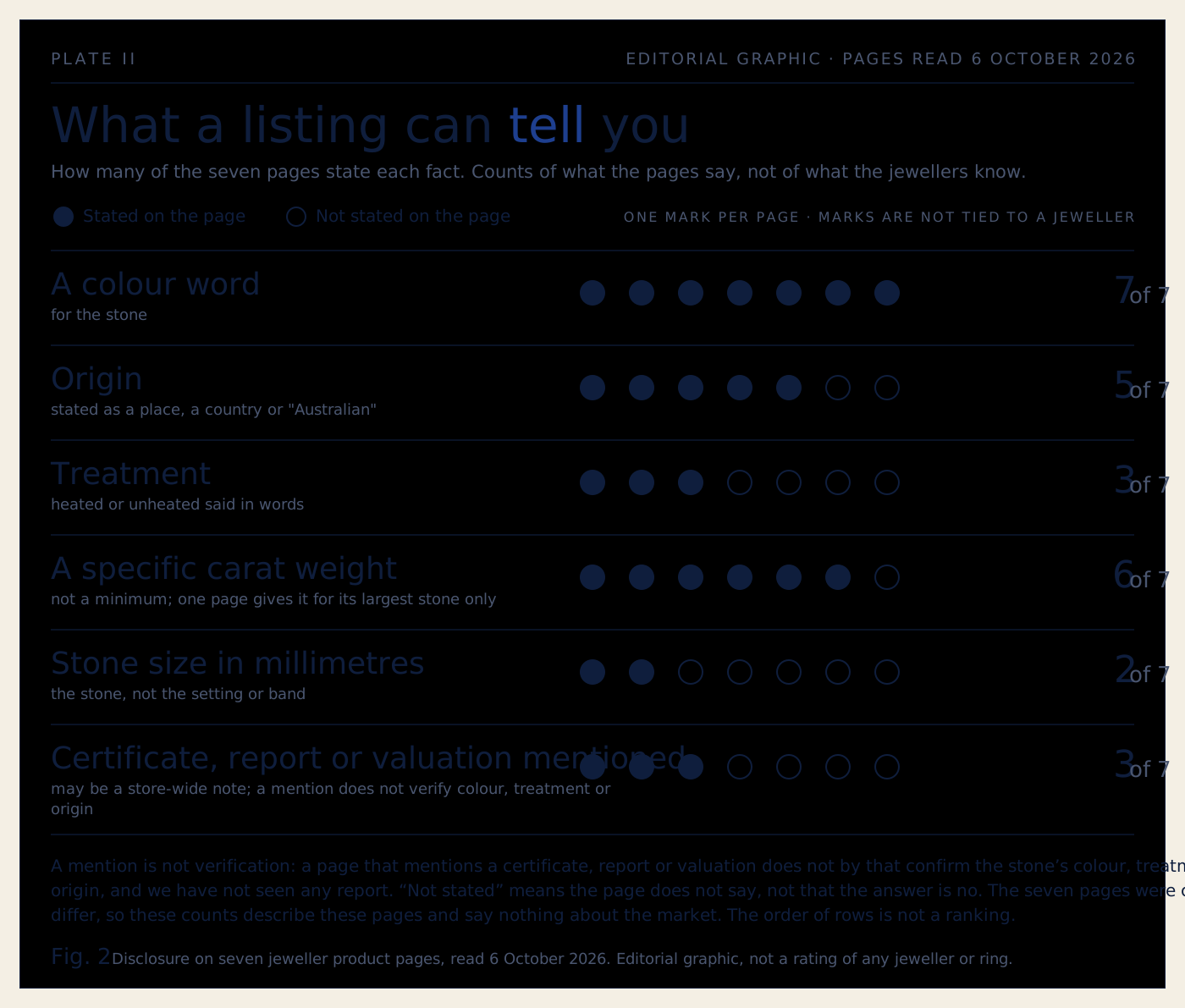
The short answer. "Green sapphire" is a wide label. We read seven listings from seven Australian jewellers on 6 October 2026, and the label covers a mint-green pear sapphire, a stone called soft green, plain "green" stones from 1.46 ct to 3.69 ct, one ring whose title says green and whose description says teal, and a cluster of teal, blue and green stones sold as parti tones. The cuts, settings and prices differ just as much, from A$1,750 to A$14,460. So do the facts each page gives. Origin is stated on five of the seven pages and treatment on three. Only one gives a certificate reference number for the stone. This isn't a ranking, and it says nothing about how popular green sapphire is. Each ring is here because it shows one thing a green-sapphire listing can do, or leave out, that the others don't.
How we chose, and what this isn't
We looked at a larger set of Australian listings and kept seven that met three tests: the jeweller is Australian, the page names a green or blue-green sapphire as the ring's stone, and the ring teaches something the other six don't. The order below follows how each jeweller describes the colour, from mint to blue-green. It isn't a ranking. No ring is better, better value or better made than another here, and we haven't judged any stone's colour.
Everything marked As listed comes from the jeweller's own product page, read on 6 October 2026 and linked, in our words. Prices are in Australian dollars as shown that day, and availability can change. Everything marked What it shows is our observation. "Not stated" means the page doesn't say. It doesn't mean the stone is untreated, treated, or of unknown origin, only that the answer isn't on the page. We haven't seen any of these rings or any laboratory report.
One jeweller, Bentley De Lisle, is also the only jeweller whose rings are in the Sapphire Rings directory. That gave it no preference here. Its ring went through the same three tests as the other six, and it sits in the middle of the order.
The seven at a glance
As listed on 6 October 2026.
| Ring | Colour word on the page | Stone | Origin | Treatment | Price |
|---|---|---|---|---|---|
| Matilde, Divine Elements | "mint green" | Pear, "minimum 1.00ct" | Not stated | Not stated | A$1,750 |
| Light Green Australian Sapphire Trilogy, TINK | "soft green", "light green" | 1.25 ct round brilliant | Rubyvale, Queensland gemfields | "natural (unheated)" | A$8,340 |
| Amelia, Cushla Whiting | "Green (Unheated)" | 2.05 ct emerald cut | Australia | "Unheated" | A$10,500 |
| Sapphire Toi Et Moi, Bentley De Lisle | "green" | 1.46 ct, "fancy" cut | Australia | "unheated", certificate reference given | A$5,900 |
| Lyric Green 3.69, Grew & Co | "green" | 3.69 ct oval | Not stated | Not stated | A$14,460 |
| Australian Green Sapphire Solitaire Ring, Mondial by Nadia | "Green" (title), "Teal colour" (description) | 4.06 ct round brilliant | "Australian" | Not stated | A$13,500 |
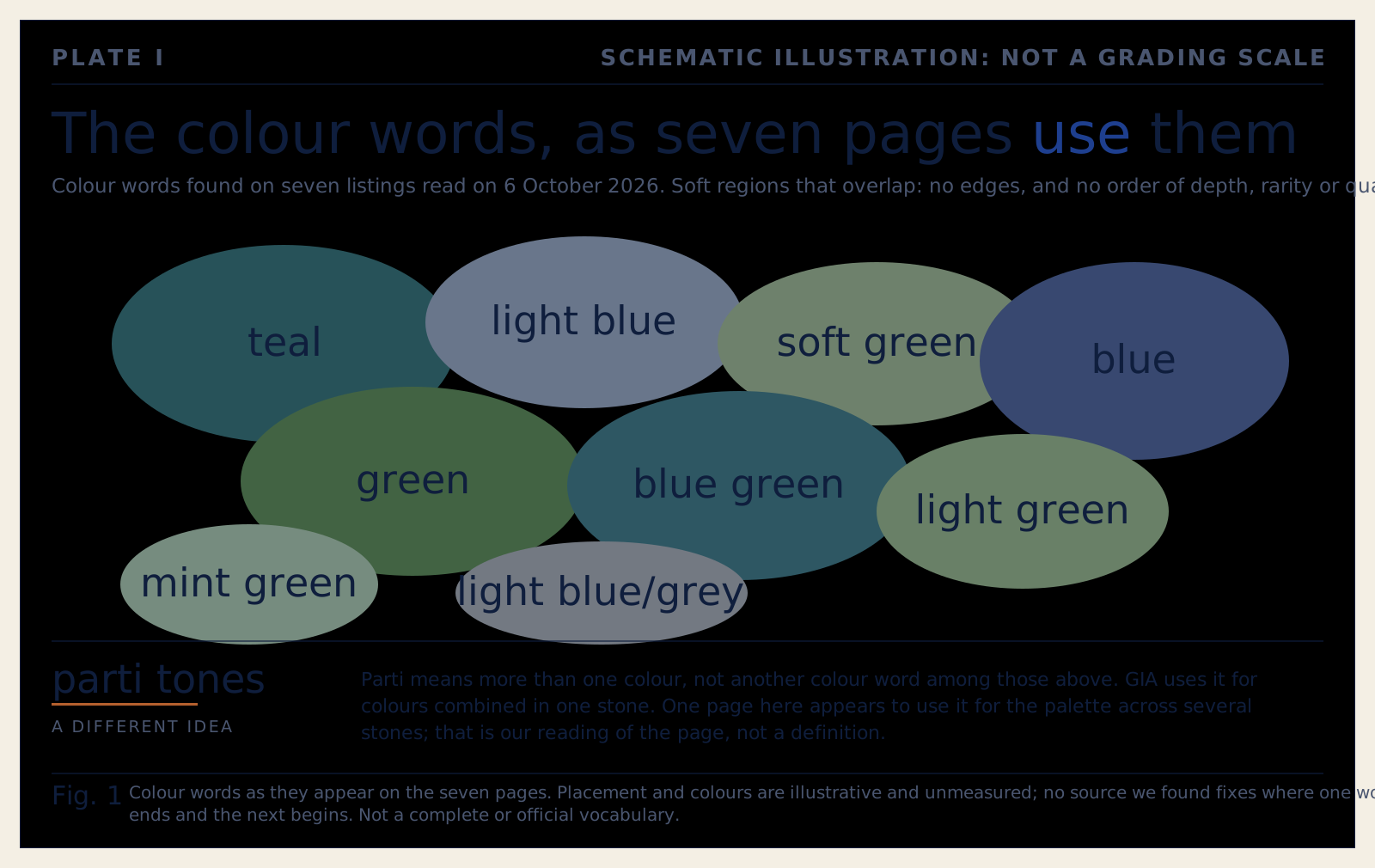
| Olympia Blue Green Sapphire Cluster Ring, Black Finch | "teal", "blue", "green", "parti tones" | Six round stones, largest 2.26 ct | "Australian sapphires" | Not stated | A$8,790 |
Soft and mint greens
1. Matilde, Divine Elements
As listed. Divine Elements describes a mint-green pear-shaped sapphire with round diamond accents, in 14K gold that the buyer chooses as rose, yellow or white, on a 1.40 mm band. The price is A$1,750, and the page says the ring is available through its secure store. The centre stone is given as "minimum 1.00ct". The page doesn't state origin or treatment. It says the studio confirms the selected stone, treatment and documentation before purchase.
What it shows. Some listings sell a design, with the stone settled afterwards. "Minimum 1.00ct" is a floor. The exact carat, colour and treatment of the stone you'd receive aren't on the page. At A$1,750 it's the lowest price of the seven, but the page prices a design, not a measured stone. Before comparing it with a ring whose stone is fixed, ask which stone, with which report.
2. Light Green Australian Sapphire Trilogy, TINK
As listed. TINK lists a 1.25 ct round brilliant sapphire in a trilogy with two round white diamonds, 0.30 ct in total, in 18ct yellow gold. It calls the colour "soft green" in the description and "light green" in the specification, and calls the stone "natural (unheated)", Australian and "mined and cut in Rubyvale". The band is 2.2 mm wide and 1.7 mm high, and the total setting height is 6.85 mm. The ring is ready to ship, dispatched within seven days, at A$8,340.
What it shows. A fuller listing. This is one of the more complete pages of the seven: origin to a named place, treatment in plain words, and setting height, with the note that the ring is designed to sit alongside a small to moderate wedding band. Even so, it cites no laboratory report and gives no millimetre size for the stone. "Unheated" here is TINK's statement. The question that remains is who says so, and where the report is.
Green
3. Amelia, Cushla Whiting
As listed. Cushla Whiting lists a 2.05 ct emerald-cut sapphire, claw and bezel set, with four straight baguette diamonds totalling 0.41 ct, in 18kt yellow gold. The details give the colour as "Green (Unheated)" and the origin as "Australia". The page offers size N, with a complimentary resize, at A$10,500. In its own words the design takes its cues from Art Deco geometry.
What it shows. Where a fact sits on a page varies. There's no separate treatment line. "Unheated" appears inside the colour field and in the description, so a reader scanning for a treatment line could miss it. Origin is given to country level, and no report is mentioned. The ring also shows a different design idea from the other six: a step-cut stone flanked by straight-edged baguette diamonds.
4. Sapphire Toi Et Moi, Bentley De Lisle
As listed. Bentley De Lisle lists a green Australian sapphire of 1.46 ct, "fancy" cut, measuring 7.48 x 6.85 x 4.24 mm and described as "eye clean", set beside a 1.03 ct pear-cut diamond (D colour, VS1) in 18ct yellow gold. The page describes it as "Natural certified stone: AGR202201-0102 – unheated". It gives the ring's size as L, its maximum width as 9.45 mm and its weight as 3.75 g, with one in stock at A$5,900. This is also directory row Sapphire Toi Et Moi, which matched the jeweller's page on 6 October.
What it shows. Two things. It's one of only two pages here, with Black Finch's, that give millimetre sizes for the stone, and the only one that gives a certificate reference number for the stone. The page doesn't name the laboratory behind the reference, and we haven't seen the report. For the diamond, the page uses the label "LG Diamond" with its own number and doesn't spell out what that means, so we say nothing about the diamond beyond its listed size, colour and clarity. The sapphire's reference number still gives a buyer something specific to ask about. The ring is also the one two-stone design in the set: a green sapphire and a pear diamond side by side. The page's cut word for the sapphire is "fancy", and it says nothing more about the outline.
5. Lyric Green 3.69, Grew & Co
As listed. Grew & Co lists a 3.69 ct oval green sapphire in a low-set four-claw setting, on a double band in 18k yellow gold. It's priced at A$14,460, available in three size ranges, with completion estimated at two to four days. The page doesn't state origin, treatment, millimetre size or a report. Its "Australian owned" badge describes the business, not the stone.
What it shows. A short listing leaves questions open. It's the second-largest stone and the highest price of the seven, on a page with the fewest fact lines. That doesn't mean the stone is treated, untreated or uncertified. It means the answers aren't on the page, so they're the first questions to ask. The page describes a low-set four-claw setting and a rounded band it calls comfortable for everyday wear.
Where green meets teal
6. Australian Green Sapphire Solitaire Ring, Mondial by Nadia
As listed. Mondial by Nadia titles the ring a green sapphire solitaire. The description calls the stone "Australian 4.06ct Teal colour", round brilliant cut, in 18ct rose gold. It says the ring is accompanied by a "GSL Certificate and Valuation". The price is A$13,500, with add to cart on the page. The page doesn't state treatment, and it doesn't say what the certificate records.
What it shows. One page, two colour words. The title and web address say green and the description says teal. That's the pattern we described in our teal sapphire guide, and it matters here because a reader looking for either a green or a teal sapphire could reasonably pick this ring. At 4.06 ct it's the largest stone of the seven. Ask which colour word the certificate uses.
7. Olympia Blue Green Sapphire Cluster Ring, Black Finch
As listed. Black Finch lists six round stones in a claw-set cluster on a 2.2 mm band in 18kt yellow gold. Its stone details give the largest as a 2.26 ct teal sapphire measuring 7.8 mm, and the others as two light green (2 mm and 2.2 mm), one teal (2.15 mm), one light blue (2.6 mm) and one light blue/grey (3.3 mm). The title says "Blue Green", the description says "teal, blue, and green" stones and "parti tones", and calls them Australian sapphires. The ring is made to order, four to six weeks, at A$8,790. Treatment isn't stated. A general note on the page says pieces over $5,500 come with a third-party accredited valuation certificate.
What it shows. Green as one note in a palette. If you're shopping for a green sapphire ring, this is a ring that includes green sapphires, and its two light green stones, at 2 mm and 2.2 mm, are among the smallest in the cluster. In our teal guide, parti meant colours combined in one stone, which is how GIA uses the word. Here the page appears to use it for the palette across several stones. That's our reading of the page, not a definition. The page does itemise every stone by colour and millimetre size.
What the seven show together
The word isn't a measurement. Across seven pages we found mint green, soft green, light green, green, green unheated, teal, blue-green and parti tones. No two jewellers used the same set. We found no source that fixes where green ends and teal begins, which is the question we tried to answer in the teal sapphire guide.
Disclosure varies. On the seven pages, origin is stated on five (to a named place on one, to a country on the others), treatment on three, and a certificate or report of any kind is mentioned on three. Only one gives a reference number for the stone. Only two give stone sizes in millimetres. These are counts of what these seven pages say, not of what the jewellers know, and the seven were chosen to differ, so they say nothing about the market.
Prices can't be compared as listed. The range is A$1,750 to A$14,460, more than eight times. But the pages differ on what they disclose and on whether the stone is fixed or still to be chosen, so a price on one page isn't a like-for-like price on another.
Shapes vary too. The seven use pear, round brilliant, emerald cut, oval and one "fancy" cut, in solitaire, trilogy, five-stone, toi et moi and cluster designs.
Ask for
GIA says heating is an accepted treatment for sapphire, and that a large amount of the sapphire on the market has been treated by heat or lattice diffusion. Its identification reports cover colour, whether a stone is natural or laboratory-grown, and detectable treatments, with an opinion on geographic origin on request where possible. GIA also says it doesn't grade sapphire or other coloured stones. So for any green sapphire ring, whatever the listing says, ask for:
- The report, before the quote. Which laboratory, and what it says about colour, treatment and origin.
- The word the report uses for the colour, not the one in the title.
- Origin and who says so. A laboratory opinion or the seller's statement.
- Treatment in the laboratory's words, not the listing's.
- The stone itself, in millimetres. And whether the stone is the one in the photographs or one still to be chosen.
- Colour in daylight, in photographs or video from several angles if you can't see it in person.
See real examples
Each ring above links to the jeweller's own page, because that's where its price, availability and facts live. In the Sapphire Rings directory, as of 6 October 2026, there are three rings tagged green (one available, two sold) and five tagged teal, all from Bentley De Lisle, the only jeweller listed. That's the directory's reach today, not the market's. Sapphire Rings lists rings and doesn't sell them.
Sources and dates. Jeweller product pages for all seven rings, each read on 6 October 2026 (linked above). GIA, buyer's guide and grading FAQ, read 6 October 2026. Sapphire Rings directory rows, read 6 October 2026. Prices and availability are the jewellers' as shown that day and may have changed.