The short answer. Teal is a trade word, not a laboratory category. We looked for a gemmological authority that says where blue stops and teal starts, or where teal turns green, and didn't find one. GIA says it doesn't grade or provide quality analysis for sapphire or other coloured stones, and it does describe colour in words such as greenish blue. We found no published boundary between those words. So one stone can be sold as blue, teal blue or teal green, sometimes by one jeweller on one page. For a ring, read "teal" as a stretch of a colour range, and ask what the report says rather than what the listing calls it.
Where the colour range sits
Sapphire is every gem-quality corundum that isn't red. Red is ruby. Colour is usually described by hue (the kind of colour), tone (how light or dark) and saturation (how strong). Teal is a hue question: it sits between blue and green.
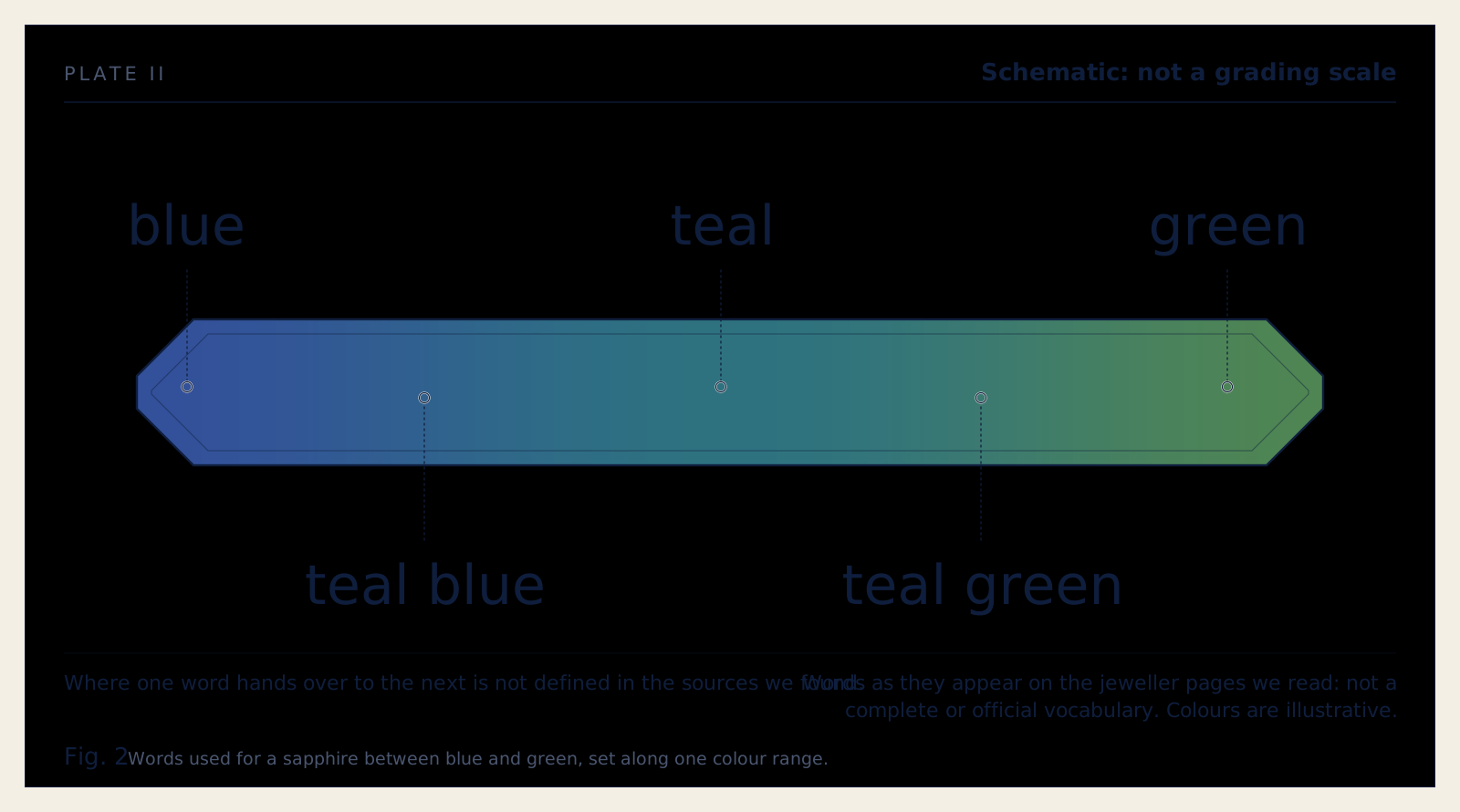
A dealer page states a 15 per cent rule: a stone is described with a second hue's name, as in greenish blue, once that hue passes about that share of its colour. We couldn't trace the figure to a GIA publication, and we haven't used it. That is a result of our search, not proof the rule is wrong. GIA's grading FAQ says only: "GIA doesn't grade or provide quality analysis for sapphire or other colored stones." The same FAQ says its identification reports cover colour among other things, along with detectable treatments.
The nearest thing to a statement about boundaries comes from another laboratory, and about a different pair of colours. An SSEF article (Krzemnicki, 2020) says the boundary between ruby and pink sapphire "has never been internationally well defined", and that without agreed global standards a laboratory may need to set its own internal ones. That is an analogy only. Teal isn't ruby, and the article says nothing about teal. We found nothing to suggest teal is any better defined.
What the sources say about Australian sapphire colour
Australian sapphire is mined mainly in the central Queensland gemfields around Anakie and Rubyvale, and in the New England region of New South Wales around Inverell and Glen Innes (Geoscience Australia; Australian Museum). Geoscience Australia describes corundum as carried to the surface in igneous rocks such as basalts, and the NSW geological survey names alkali basalts and their volcanic deposits as the source rocks of the New England sapphires.
GIA's geological review (Giuliani and Groat, 2019) says Australian sapphires "are either blue-green-yellow (BGY) or pastel-colored". Another GIA paper (Palke and others, 2019) groups blue sapphire into metamorphic and basalt-related sources, puts Australia in the second group, and says metamorphic stones generally carry less iron than basalt-related ones. A third, on the causes of colour in corundum (Dubinsky and others, 2020), says Fe²⁺–Ti⁴⁺ pairs are the main chromophore in blue sapphire, that iron-related colour centres give yellow, and that "less intense olive green to teal green stones are often found in basalt-hosted corundum deposits". Separately, GIA's sapphire quality-factor page describes green sapphire as a mix of yellow and blue components.
Our reading, not a laboratory finding: a stone with both a blue and a yellow component could sit anywhere between blue and green. The sources tie basalt-related stones to blue, green and yellow and to teal-to-olive greens. They don't say Australian stones are usually teal, and the Australian Museum describes blue as the colour NSW is renowned for, with green, yellow, orange and pink also occurring. The sources we checked don't make teal an Australian signature. The same directory lists teal-tagged stones from Madagascar and Tanzania.
Teal also isn't parti. GIA says parti-coloured sapphires "show combinations of different colors". One jeweller in the directory, Bentley De Lisle, uses "teal" for a well-blended colour, "not zoned like in parti Sapphires", and calls a 50/50 blend ideal. That's one jeweller's usage, not a standard.
One stone, several names
Here is how four real rings read on their jeweller's own pages. The facts in the table are the jeweller's, read on 4 October 2026 and linked to the directory rows. Everything under the table is ours.
| Ring (directory) | Title | Description line | Specification: colour | Origin and treatment as listed | Listed price |
|---|---|---|---|---|---|
| Blue Sapphire Diamond Ring | "Blue Sapphire Diamond Ring" | "a mesmerising deep blue sapphire" | "deep teal blue" | 4.21 ct octagon; origin Madagascar; "unheated", citing report CGL202103218836 | A$16,400 |
| Marquise Cut Blue Sapphire Diamond Ring | "Marquise Cut Blue Sapphire Diamond Ring" | "blue Madagascar sapphire" | "teal blue" | 1.70 ct marquise; origin Madagascar; "standard heat only", citing report LGL2205054246 | A$5,750 |
| Teal Green Sapphire Diamond Ring | "Teal Green Sapphire Diamond Ring" | "teal green Sapphire from Tanzania" | "teal green" | 2.03 ct round; origin Tanzania; "unheated", citing report CGL202105230671 | A$7,550 |
| Art Deco Triple Cluster Ring | "Art Deco Triple Cluster Ring" | "Australian matching set of sapphires" | "teal green" | Listed as "Australian Sapphire", 2.90 ct; no treatment or report listed | A$9,500 |
All four are from Bentley De Lisle, the directory's only jeweller. We haven't seen any of the reports. We name no laboratory because the listings don't.
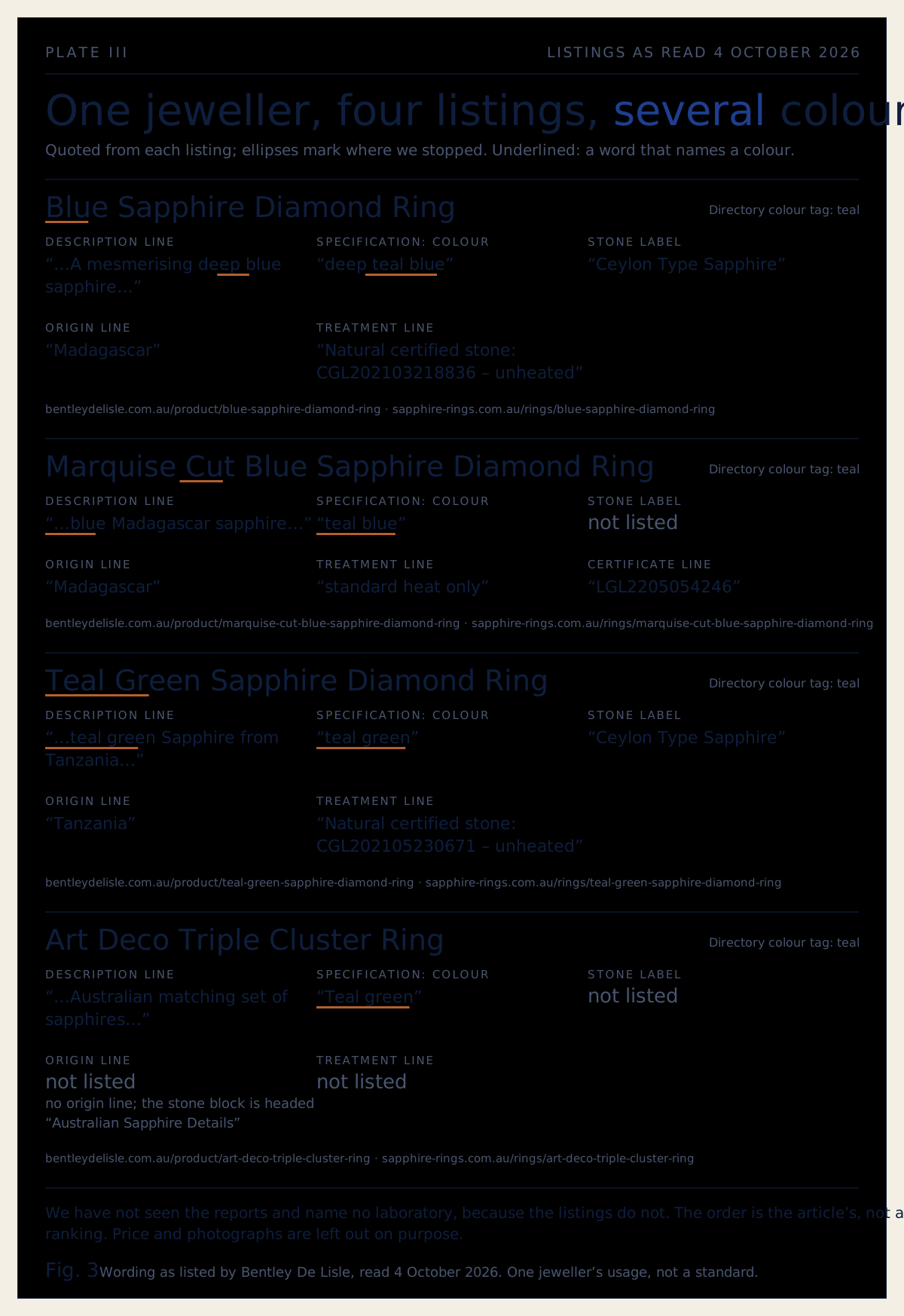
The first two rings are titled blue and specified teal blue: both words appear on the same page. We can't tell which word a laboratory report would use. Sapphire Rings files both rings under teal in the directory, following the specification line rather than the title.
The first and third pages also carry a "Ceylon Type Sapphire" label above an origin of Madagascar and Tanzania. The jeweller's own guide to green sapphire says Madagascar stones are called "Ceylon type" because some stones can't be told apart by genetic makeup when certified. On that usage the label names a type of stone, not an origin. That explanation covers Madagascar only. It doesn't explain why the Tanzania ring carries the label, and we haven't found any explanation that does. The line that says "Origin" is the origin line.
What we couldn't settle
Whether teal is found in Sri Lanka. One retail guide (Deliqa Gems) says blue-green sapphires "are not found in Sri Lanka due to the low iron content in the soil". Others list Sri Lanka as a source of teal, including the Bentley De Lisle teal page and Navneet Gems. We found no laboratory, survey or museum source that confirms or rules out either. What the sources do say is that Sri Lanka's sapphire is metamorphic, that metamorphic stones generally carry less iron than basalt-related ones, and that GIA lists Sri Lanka among sources of "blue and fancy sapphires". "Generally less" isn't "never", and with no agreed edge for teal, "does it occur there" depends on where you draw the line. The practical point: don't guess origin from colour. Origin is a laboratory's opinion, and a listing should say whose.
Where blue ends and teal begins, and where teal ends and green begins. Unsettled by design. The words are used by trade custom, and we found no definition to cite.
What the reports say. The listings cite report numbers. We haven't seen the reports.
Price. We found no authoritative price guidance for teal and give none.
What this means for a ring
Colour is read face-up, from one direction. GIA notes that blue sapphires often show greenish blue and violetish blue in different directions (pleochroism), and says cutters weigh this when orienting a stone. A stone's face-up colour can therefore depend on how it was cut. Ask for photographs or video in daylight, from more than one angle.
Treatment is a separate line from colour. GIA calls heating an accepted treatment and says a large amount of sapphire on the market has been treated by heat or lattice diffusion. Two of the four listings above say "unheated" and one "standard heat only". Read that line on its own, and ask for the report behind it.
Ask for
- The report, before the quote. Which laboratory, what it calls the colour, and whether it states treatment and origin.
- The treatment statement, in the laboratory's words, not the listing's.
- The basis for origin: a laboratory opinion or the seller's statement. Ask what a label such as "Ceylon type" means on that page.
- Colour in daylight, from several angles, in photographs or video if you can't see it in person.
- Blended or zoned. Teal and parti are different looks, and a stone described one way may show the other from another angle.
See real examples
As of 4 October 2026 the directory has five rings tagged teal and one parti-colour ring, all from Bentley De Lisle, which is the only jeweller listed. That's the directory's reach today, not the market's. You can also filter by Australian origin. Sapphire Rings lists rings and doesn't sell them.
Sources and dates. Read 4 October 2026: GIA (sapphire quality factors, sapphire description, buyer's guide, FAQ on grading; Gems & Gemology: Giuliani and Groat 2019, Palke and others 2019, Dubinsky and others 2020); SSEF (Krzemnicki, 2020); Geoscience Australia (page updated 14 May 2025); Australian Museum; NSW Department of Primary Industries; Deliqa Gems and Navneet Gems retail guides; Bentley De Lisle product and guide pages. Prices and availability are the jeweller's as listed that day.