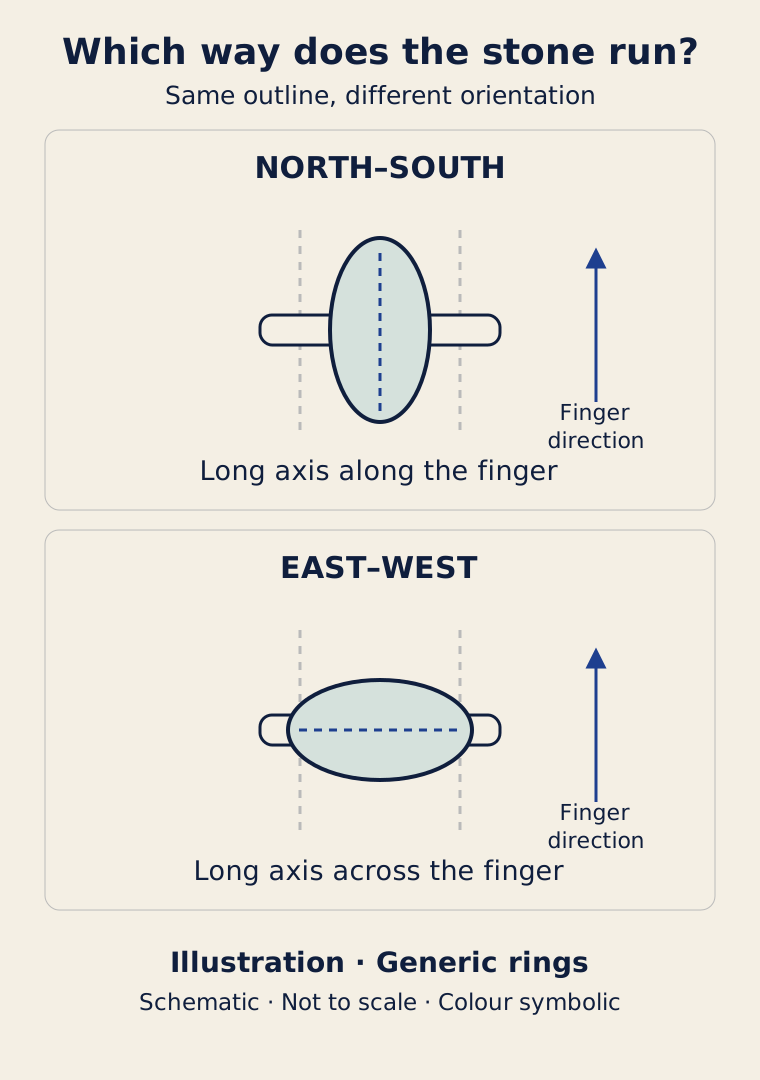
An east–west sapphire ring sets the main stone's longer axis across the finger rather than up and down it. That describes an orientation. The ring around it can be a bezel solitaire, a signet, a multi-stone composition or something intended for a pinky finger.
These seven designs from six Australian jewellers show different ways to use that sideways line. We selected them for their design differences, not as a ranking. The original listings were checked on 7 October 2026; prices below are in Australian dollars, and listings can change. The selection includes made-to-order offers and one sold original, identified below.
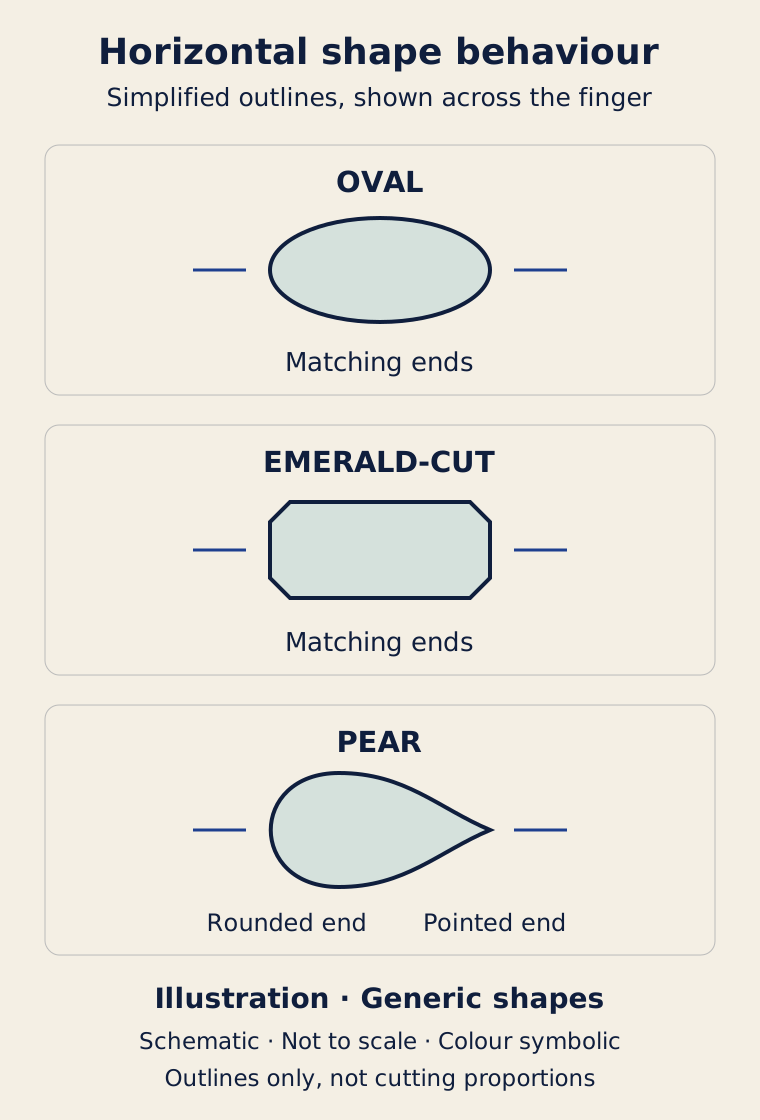
Specifications come from the linked jeweller pages. The design observations are our editorial reading of those descriptions, not a hands-on assessment. We haven't handled these rings or inspected their sapphires or laboratory reports. The diagrams explain general ideas and depict none of the selected products.
Geneine Honey — East West Sapphire Ring
Geneine Honey lists a green Australian sapphire of 1.78ct, bezel-set in 18ct yellow gold, at $7,200. A bezel is a metal rim around the stone; here, the listing explicitly places it east–west.
This single centre-stone design gives the edit a straightforward starting point: the horizontal sapphire and its surrounding rim. Our interest is in that contained outline, before introducing offset placement or additional stones. The page doesn't name the stone's shape, so we haven't assigned it an oval or other cut.
The listing offers Add to Cart and size M with resizing. Confirm dispatch timing; its general four-to-six-week note applies if an item is out of stock or needs making.
See Geneine Honey's East West Sapphire Ring.
Kerry Rocks — Organica
Organica adds a second design decision: the sapphire is deliberately offset. Kerry Rocks describes a natural green Australian emerald-cut sapphire, 0.89ct and 7.65 × 4.65mm, in a 14kt yellow-gold bezel. The jeweller says the stone was sourced from Central Queensland. The price is $4,450.
The textured band tapers from 3mm to 2.6mm. In our reading, the rectangular stone, offset position and changing band width make the orientation part of the whole composition. It is more to consider than simply whether the stone sits sideways.
Kerry Rocks discusses pairing the offset design with another band. Treat that as a useful question for the jeweller, rather than a promise that your existing band will fit. The page identifies a one-of-a-kind ring in size N and a one-to-two-week resizing dispatch estimate. It offers Add to Cart, but its size controls also carry unavailable wording; confirm the ring's availability.
Australian Diamond Valley — Dover
Dover uses claws and a wave-shaped band. Australian Diamond Valley describes a 1.50ct blue Australian oval sapphire set east–west, with a 2mm band. The listing displays $3,440 and offers 18kt yellow, rose or white gold, or platinum.
Claws hold the stone at separate points rather than enclosing its outline in a bezel rim. Our design observation is the combination: an elongated oval across the finger and a band described as a sculptural wave. That gives the surrounding metal a role in the horizontal composition too. It doesn't establish how high the ring sits or how it will pair with another band.
The page says made to order, with one to three weeks for creation, but also displays sold-out or unavailable signals. Confirm that Dover can currently be ordered. Its web address retains an older diamond-ring name; the live product heading is Dover Sapphire Solitaire Ring.
See Australian Diamond Valley's Dover.
REIGNE — East-West Sapphire Signet
REIGNE's signet puts a 1.61ct oval Australian sapphire in a smooth bezel, in 18K yellow gold. The price is $4,950. The page doesn't give a specific blue, green or teal colour name.
The jeweller describes a signet-inspired silhouette. That is the reason for its place here: a horizontal sapphire within signet styling, rather than orientation treated only as an engagement-ring setting choice. Our reading is that the ring's identity depends on the surrounding gold form as well as the stone's axis.
The signet label doesn't tell us the setting height, and we wouldn't infer a low profile from it. The listing has Add to Bag, but doesn't settle whether this individual ring is ready to ship or needs making.
See REIGNE's East-West Sapphire Signet.
REIGNE — East-West Sapphire and Diamond Ring
The second REIGNE example serves a different purpose. This platinum design combines an oval centre sapphire with six baguette sapphires and both baguette and round brilliant diamonds. The diamonds are listed at 0.64ct total. The price is $10,950.
Here the horizontal centre is part of a larger arrangement of stones. REIGNE describes the diamonds in a descending architectural composition; our interest is in how the oval participates in that wider design. The signet makes surrounding metal central to its identity, while this ring gives additional stones that compositional role.
The page's 1.63ct sapphire wording leaves the centre weight unclear, so we haven't used it as the centre's weight. It also doesn't specify sapphire origin or the centre's fastening. Add to Bag is present; ring-specific stock and making time need confirmation.
See REIGNE's East-West Sapphire and Diamond Ring.
KAVALRI — Dahlia
The original Dahlia is sold. Its listing describes a 1.31ct pear-shaped Australian sapphire called Green Teal, in 18ct yellow gold. The $7,195 still displayed belongs to that sold example, not a quote for a new commission.
Dahlia earns its place through the pear. Unlike an oval, a pear has a rounded end and a pointed end. Laid sideways, that outline introduces a direction across the finger. This is our observation about shape, not a rule that asymmetry improves a ring. KAVALRI names the design Curved East West, but the page doesn't provide band dimensions or setting height.
KAVALRI offers custom creation with a chosen centre gemstone and gives approximately six weeks for crafting, plus delivery. A new ring would need its own agreed sapphire specifications, metal and price. The original's 1.31ct weight, colour and Australian origin cannot be assumed for its replacement.
See the sold Dahlia design and KAVALRI's custom offer.
TOK — East West Oval Cut Blue Sapphire Pinky Ring
TOK uses the orientation for a pinky ring, with a blue oval sapphire specified at 10 × 8mm. The made-to-order listing offers 18k white, yellow or rose gold and gives separate starting prices: from $3,950 with a lab-grown sapphire, or from $6,750 with a natural sapphire.
Its contribution is purpose and scale. East–west needn't mean an engagement ring, and the millimetre dimensions give a concrete starting point for discussing how the ring will look on your intended finger. They don't establish fit or carat weight; no carat figure is stated.
The page shows Sold out alongside a made-to-order enquiry offer. Treat it as a commission enquiry, not ready stock. Its making panel estimates about four weeks; confirm the actual timing and stone option in your quote. The natural and lab-grown alternatives shouldn't be merged into one set of gemstone specifications.
See TOK's east–west sapphire pinky ring.
What changes when the stone turns sideways?
These examples separate orientation from the other decisions around it. Geneine Honey uses a bezel around a single centre stone; Organica adds an offset position and taper. Dover pairs claws with a wave band. REIGNE uses the same horizontal idea in two architectures: signet and multi-stone. Dahlia introduces a pear's directional outline, while TOK changes the ring's intended finger and offers distinct stone options.
Our view is that those relationships are more useful to compare than the east–west label alone. Shape, placement, surrounding metal and neighbouring stones each contribute. None of that makes a horizontal ring inherently better.
What to ask before choosing
Ask for a side view and the setting height: orientation alone doesn't tell you how far a ring rises from the finger. If you intend to wear another band beside it, ask the jeweller to show that specific pairing. For a commission, confirm which details belong to the illustrated original and which will be agreed anew.
What we don't know matters too. These selected pages don't state sapphire treatment or identify a sapphire laboratory report. Natural or lab-grown status is explicit for Organica and for TOK's separate options; it remains unstated for the other five. Ask for those details for the stone you would actually receive, along with its dimensions, origin statement, final price and availability.